
A free house is a pub that isn't tied to a brewery or pub company for its drinks, so whoever runs it can buy beer, cider and spirits from any supplier they choose. In Bristol, The Bank Tavern shows what that looks like in practice: a small, independent free house where Draught Bass sits alongside changing guest ales from local breweries and a real cider.
Below we unpick the other ways a British pub can be owned and run (tied tenancies, pubcos, brewery estates and managed chains) and what each one means for the taps in front of you and the total on the card machine. Four Bristol pubs illustrate the models, each a clear-cut case of its kind.
What a free house is
The word "free" refers to supply, not price. A free house has no contract obliging it to buy from a particular brewer or owner, so the licensee picks the beers, negotiates with wholesalers and small breweries directly, and sets their own prices. Often the operator owns the building outright, or rents it from a landlord who takes no interest in what's poured.
That freedom doesn't guarantee an adventurous bar. Some free houses rotate a different guest ale every week; others stock the same familiar lagers you'd find anywhere, because that's what their regulars drink. What it does guarantee is that the choice belongs to the person behind the bar.
The Bank Tavern
Redcliffe, Bristol
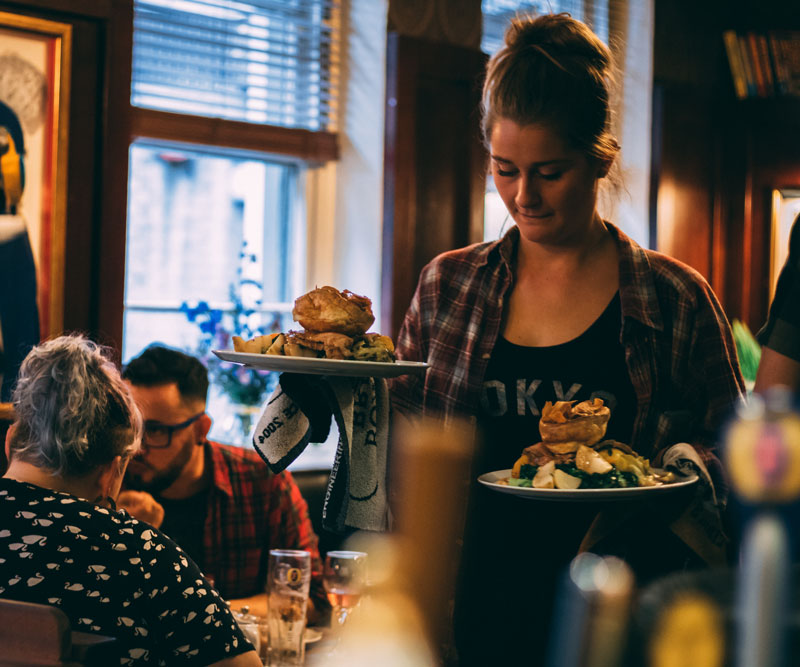
Tucked down John Street near the line of Bristol's old city wall, this compact one-bar pub has stood since the 1800s and, by its own cheerful account, has outlasted riots, two world wars, council planners and Thatcher. Inside it's bare floorboards and green settles, and the bar shows what supply freedom looks like when a licensee leans into it: Draught Bass is always on, with three changing guests, mostly from local breweries and often including something dark, plus a real cider. The building belongs to Red Oak Taverns, with Sam Gregory holding the lease, a neat reminder that "free" describes the beer, not the bricks. Its real fame is Sunday lunch, which the pub says has twice won best in Bristol and which gets booked up months ahead, so plan early if you want a roast as the evenings draw in at the end of October. If you're curious about the cider, our scrumpy explainer covers the West Country styles.
Tied pub meaning: how the beer tie works
A tied pub is one whose tenant or leaseholder has agreed to buy some or all of their drinks from the company that owns the building. In return the publican usually pays a lower rent than they would on the open market, and may get help with repairs, training or marketing.
The tie can be full (every keg and bottle comes through the owner) or partial, covering beer but not wine and spirits, for example. Many agreements allow a limited number of guest beers. For drinkers, the effect is that the bar largely mirrors the owner's price list: the core range is set elsewhere, and the publican's room to experiment depends on the small print.
Pubcos explained
A pub company, or pubco, owns a large estate of pubs without necessarily brewing anything itself. The big pubcos grew out of the Beer Orders of the late 1980s, which forced the largest brewers to sell off or free many of their pubs; newly formed property-focused companies bought them up and kept the beer tie in place, negotiating supply deals with brewers instead.
Pubcos usually let their pubs on one of two broad models. A tenancy tends to be shorter, with the owner keeping more responsibility for the building. A lease runs longer and hands the operator more of the repair bills and more control. In England and Wales, a statutory Pubs Code now governs the largest pubcos and gives their tied tenants certain rights, including in some circumstances the option to go free of tie at a market rent.
Brewery-owned pubs and brewpubs
Brewers have owned pubs for centuries, and many still do. Here the pub works as a shop window for the owner's beer, so you'll see the house brands front and centre, with other drinks filling the gaps. A brewpub takes it a step further and brews on the premises. Neither is a free house, but the tie runs to a brewer whose beer you've presumably come for, which feels quite different from a pubco tie negotiated by a property company.
The Barley Mow
Redcliffe, Bristol
Once the Duke of York, this corner pub between Temple Meads and Old Market is now Bristol Beer Factory's flagship, and the brewery owns the freehold outright, which makes it a textbook brewery-estate pub. It's a generous one, too. Roughly half of the eight hand pumps pour the house beers; the rest, along with ten keg lines, cans and bottles from around the world and real cider, roam well beyond, so a showcase pub needn't feel like a one-brand bar. The room is rustic and unfussy, all bare boards, half-panelled walls, art and plain wooden tables, with a walled garden for warmer days. Locals drop in for a pint after work, and the local CAMRA branch has named it pub of the year, which goes some way to justifying the sign outside calling it "probably the best pub in the world". Cord Kitchen's Sunday roast gets plenty of attention. Hours are short on some days, so check its page before setting out.
Managed houses and chain pubs
In a managed house there's no tenant at all. The owning company runs the pub directly and employs a salaried manager, so menus, branding, drinks ranges and prices are largely decided centrally. That's how the familiar chains operate: JD Wetherspoon is the best-known example, and Hungry Horse is a family-dining brand from the Greene King estate. Expect consistency from one branch to the next, and prices that lean on the buying power of a large group.
The Knights Templar
Redcliffe, Bristol
The name reaches back much further than the building. Wetherspoon's own history traces it to the Temple Fee, land around Temple Meads granted to the Knights Templar by Robert, Earl of Gloucester, before the order was driven out of England in 1308; prints of the Temple Fee, the station in 1846 and old Bristol hang on the walls. The pub itself fills the lower two floors of a modern block in the Quay Point development, a couple of minutes from the platforms, and it runs to the managed-chain template: doors open early, breakfast runs until noon, food carries on all day and a screen of live train departures lets you keep an eye on your connection over a coffee or a pint. Commuters, travellers and guests from nearby hotels keep it busy, and nobody comes here for quiet. They come for a cheap, predictable stop, which is exactly what central buying and pricing are built to deliver.
The Lodekka
Brislington, Bristol
Brand-new pubs are rare in Britain, and this one only opened in 2013, purpose-built on former allotments and spare land off the A4 Bath Road in Brislington. Its name is a nod to local engineering: the Lodekka was a low-height double-decker built between 1953 and 1968 by Bristol Commercial Vehicles, whose factory stood just down the road. Today it belongs to Greene King's Hungry Horse chain, and the brand does the talking. The Mix It Up format (pick a sizzler, two sides and a sauce), value menus and themed nights are shaped centrally rather than by the kitchen, and the pumps tell the same story, with Greene King real ales, usually including IPA. Most of the room is set up for diners, families above all, with a more pubby corner behind the bar for pool and the football, and it can be packed even midweek. Its current trading status is unclear, so check its page before you go.
Free house vs tied house: what changes on the bar and the bill
- Free house: the widest potential range and the best odds of small local breweries, but no group buying power, so it isn't automatically cheaper.
- Tied tenancy: a core range set by the owner, sometimes with guest slots. Tenants buy at the owner's prices, which can squeeze margins and push the price of a pint up.
- Brewery pub: the owner's beers take priority, often very fresh and well kept, with guest drinks varying by brewer.
- Managed chain: the most predictable experience, with centrally set prices that big groups can keep keen through scale.
None of these is a quality ranking. A well-run tied pub can pour a better pint than a careless free house; it's the cellar work that decides that, not the contract.
How to tell which kind of pub you're in
- Read the sign. "Free House" is often painted on the fascia, and brewery-owned pubs frequently carry the brewer's name or logo.
- Scan the pumps and beer mats. If one brewery dominates, you're probably in its estate or tied to it.
- Look at the menu. Branded dish names and formats you've seen elsewhere point to a managed chain.
- Check the website footer, which often names the owning company.
- Open the pub's Pub Club page for its story and drinks details, and ask at the bar if you're still unsure; staff generally know.
What people get wrong
The biggest myth is that a free house means free drinks, or at least cheaper ones. It doesn't. Second, signs outlive owners: a pub can keep "Free House" lettering long after being bought by a pubco, so treat the sign as a clue, not proof. Third, chain doesn't mean no real ale; many managed pubs carry cask beer. And tied isn't a dirty word, especially when the tie is to a brewer making beer people travel for.
With darker evenings arriving once the clocks change at the end of October, it's a good season to test the theory yourself over a Sunday roast in a free house and a brewery tap. Opening times vary considerably across these four, so look up each pub's Pub Club page for hours and booking. For more on pub customs, see our guide to tipping in UK pubs.


