
It's ten to five, already dark, and you've just pushed open the door of an old pub to find the main bar shoulder to shoulder. Then you spot it: a panelled little room off to one side, a door half-closed, a table for four with nobody at it. That is a snug. In pub terms, a snug is a small enclosed room or screened-off corner set apart from the main bar, and it survives from the days when Victorian pubs sorted their customers into separate rooms by class, price and privacy.
Snug bar meaning: a room within the room
The word does exactly what it says. Snug means sheltered and warm, and a pub snug is the most sheltered seat in the house: usually small, often with a door or a glazed screen, sometimes holding no more than a handful of people. Some pubs called the same kind of space a private bar or a parlour. What they share is separation. You are still in the pub, still served from the same counter, but you are not in the main room.
Today that separation is a comfort. A century and a half ago, it was the whole point.
Public bar vs saloon bar: who drank where
The late-Victorian pub was built around a single serving counter, with the drinking space split into several rooms that each faced a section of it. The public bar was the plainest and cheapest: bare boards, hard seats, working men on their way home. The saloon bar cost a little more per drink and gave you more for the money in return, with upholstered seating and better fittings, and it drew clerks, shopkeepers and anyone who wanted to be seen as respectable.
Then came the smaller rooms. A private bar or snug suited people who wanted a drink without an audience, and in many pubs it was where women could drink discreetly at a time when the public bar was not considered their place. Many pubs also had a jug-and-bottle counter for buying beer to take home. One building, one landlord, one cellar, yet a customer could pass an entire evening without ever sharing a room with someone of a different station. The layout was a map of Victorian society, drawn in mahogany.
Snob screens, partitions and etched glass
Walls were only part of the job. Inside the rooms, timber partitions and cut or etched glass screens broke the space down further, letting light through while blocking a clear view. The cleverest fitting was the snob screen: a row of small glass panels set at head height along the counter, often able to swivel, so that a saloon customer could order a drink without being looked in the face by the bar staff or the drinkers across the way. Privacy, in other words, was something you paid a little extra for.
Why did pubs get rid of their snugs?
Through the 20th century, the walls came down in a great many pubs. Breweries opened interiors out into single rooms that were easier to staff and supervise, and as the strict class divisions of the Victorian era faded, paying extra to drink apart made less and less sense. The losses were heavy. Of the pubs that kept their partitions, or got them back, the best are now protected, and four of them in London show the old system in very different ways.
Where to find a snug in London
Best for seeing a divided pub put back together: Holborn
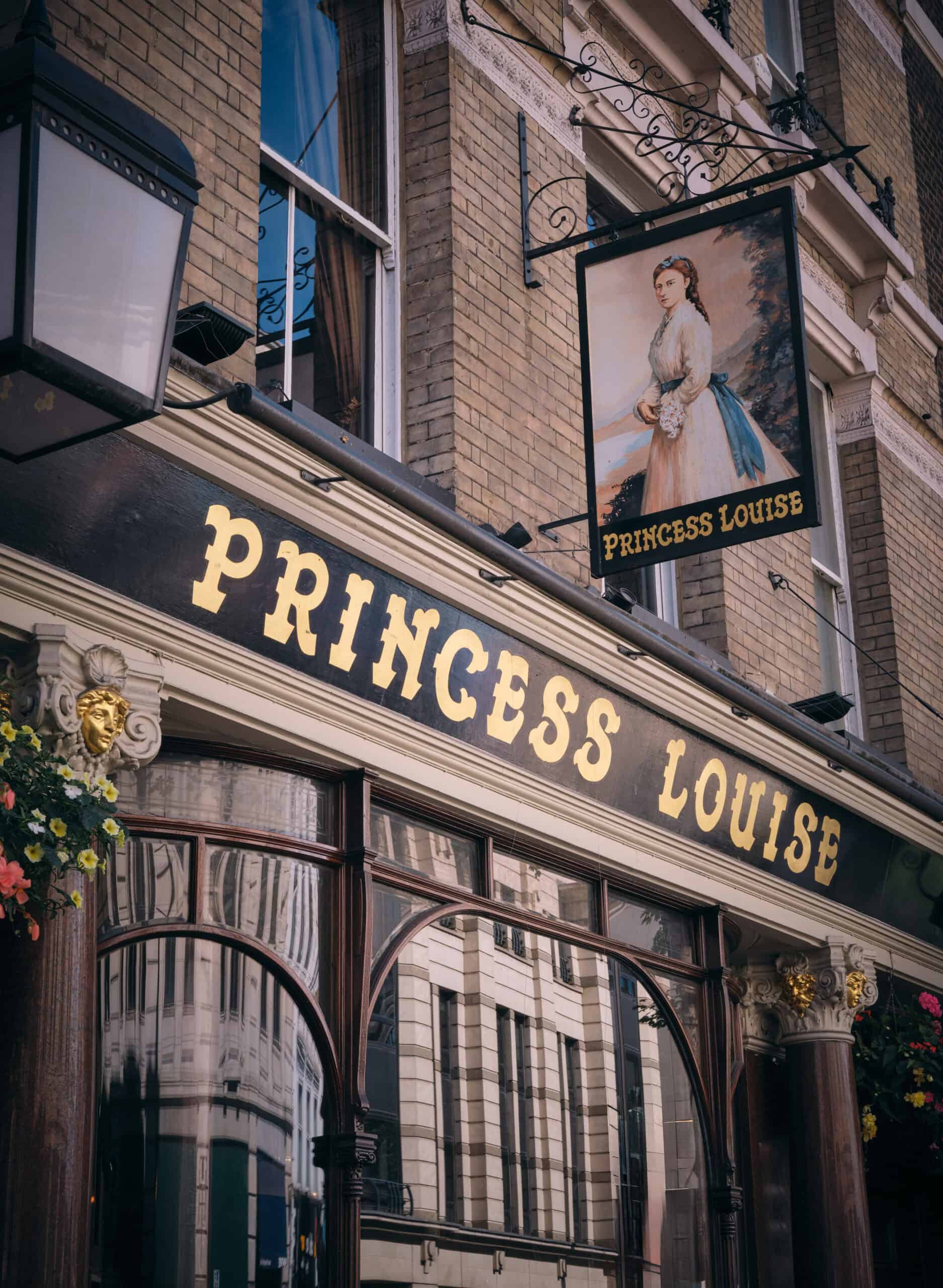
Princess Louise
Bloomsbury, Camden
Through the High Holborn door, a long corridor runs ahead, with mahogany partitions and etched glass breaking the space around the island bar into little compartments. The building went up in 1872, but the interior that matters dates from an 1891 refit, with tiling credited to W. B. Simpson & Sons and signed glass by R. Morris & Son. What makes it such a lesson in snug history is how close it came to being lost: by the late 1960s the partitions had gone and drinkers stood in one open room. Samuel Smith's later rebuilt the corridor and the seven small rooms and snugs, so you can once again feel how a divided pub worked. It gets packed after work, and the house rules (no phones, no swearing, no music or TV) keep the talk at conversation level. Come as the light fails, claim a compartment, and if every booth is full, try the quieter bar up the stairs to the right of the entrance.
Best for a rare row of original snugs: Oxford Circus
The Argyll Arms
Soho, Westminster
Oxford Circus station sits right outside, which explains the queue at the bar; what most shoppers miss is the line of tiny snugs facing it. Around 1895 the architect Robert Sawyer remodelled this 1868 pub, and his arrangement survives: a long, straight counter on one side, small screened compartments opposite, and a side corridor behind them so customers could reach their own space without crossing anyone else's. CAMRA calls snugs like these very rare, and the corridor mirrors, etched with urns, cornucopias, swags and foliage, reward a slow look. At the back, a glass panel still reads "Saloon and Dining Room", the old room names spelling out the hierarchy for you. On a winter evening the snugs go fast and the rest of the pub is often standing only, so aim for late afternoon, before the after-work crowd arrives.
Best for snob screens and a quiet conversation: Bloomsbury
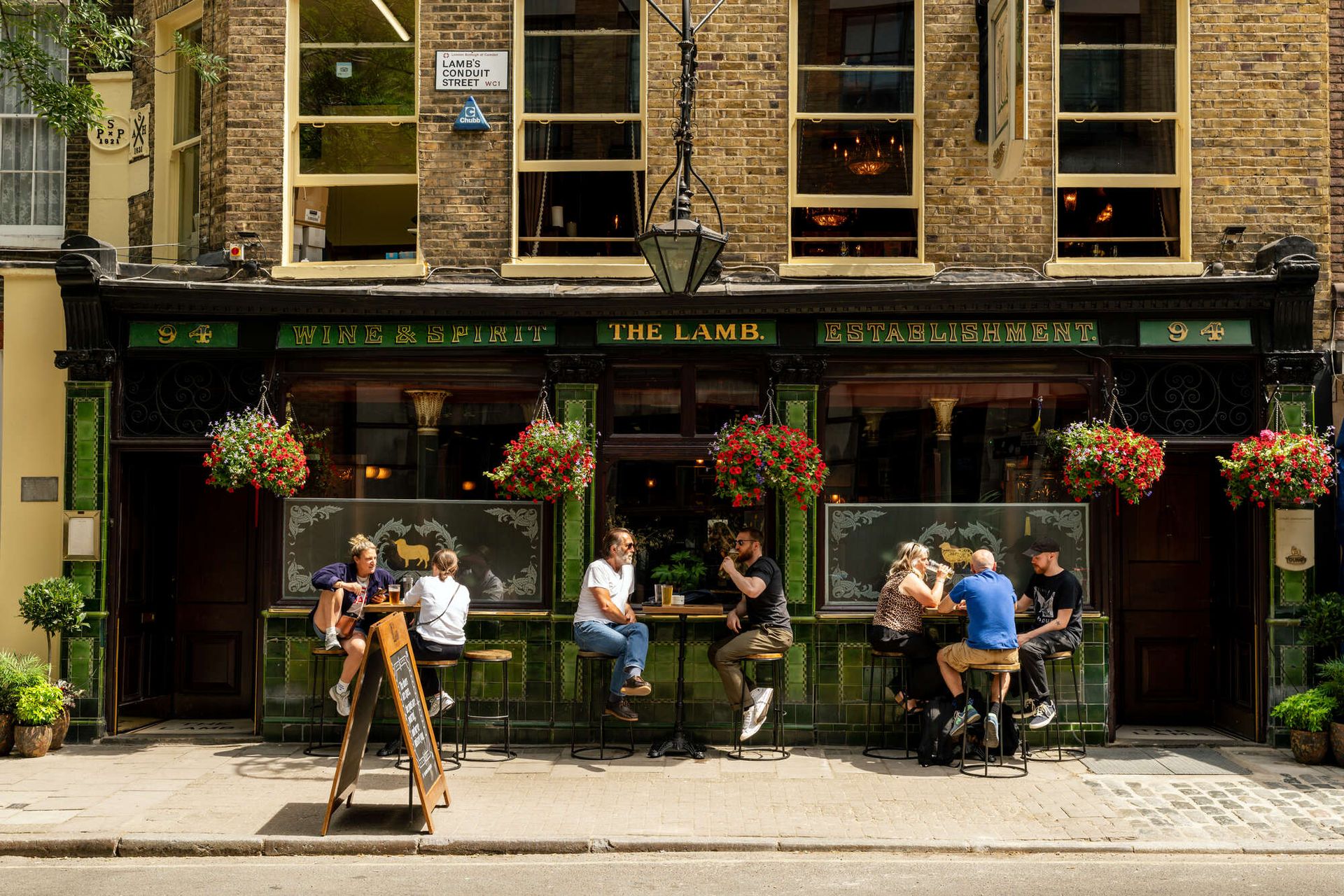
The Lamb
Bloomsbury, Camden
Snob screens are the reason to come. A double row of etched-glass panels runs along both sides of the bar, placed so that better-off customers could order without being seen by the staff, and the staff without being seen by them. One member of staff believes the glass is original, though that is his view rather than anything on record. The pub has occupied this Georgian building on Lamb's Conduit Street since the 1720s and was refitted in Victorian times; now it is mostly one room with a small snug, button-back leather benches and old photographs of the theatre crowd who once drank here. Ted Hughes was a regular. There is no background music, which suits a dark weekday evening and a conversation that needs a little quiet. Keep an eye out, too, for the Polyphon, a Victorian mechanical music machine that reportedly still works.
Best for understanding how separate rooms really worked: Maida Vale

Prince Alfred
Maida Vale, Westminster
Five separate sections fan out from one central bar in Maida Vale, and each was given its own door onto the street. That is the Victorian system in its purest form: you entered the room that matched your station and never needed to meet the drinkers next door. The refit of around 1898 divided the sections with carved wood and curved etched-glass screens, cut with low doorways so pot boys could collect glasses without stepping outside. The smallest compartment still has swivelling snob screens. Edward Ardizzone drew "The Saloon Bar at the Prince Alfred" for Maurice Gorham's book Back to the Local, and a copy hangs in the pub, so you can compare his saloon with the one around you. The trip west pays off on a Sunday as the light goes, when the lunch crowd thins and a compartment comes free; discreet screens show sport, often rugby or tennis.
Snug etiquette today
Snugs are small, and most work on a first-come, first-served basis rather than by booking. A few unwritten rules follow from that. Don't spread a party of eight into a space built for four, and if there are spare seats, expect to share them. Keep your voice down; half the appeal is the hush. And with work Christmas gatherings filling pubs from late November, a snug is no substitute for a proper reservation if you are bringing a crowd. Go early, go small, and leave the screens as you found them.
Opening times shift through the winter, so look at the listing for each pub before heading out.
Quick reference: which pub for which need
- See a fully partitioned Victorian layout, restored: Princess Louise, Holborn
- Duck into a row of rare original snugs off a shopping street: The Argyll Arms, Oxford Circus
- Study snob screens over a quiet, music-free pint: The Lamb, Bloomsbury
- Understand the separate-doors system and swivelling screens: Prince Alfred, Maida Vale
Once you have your corner, the season calls for something warming: our explainer on mulled ale and its forgotten winter cousins is worth a read, and for fires and festive rooms there are London's best Christmas pubs.


